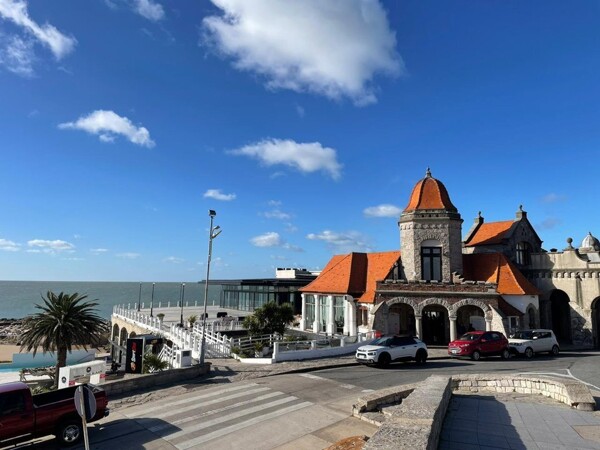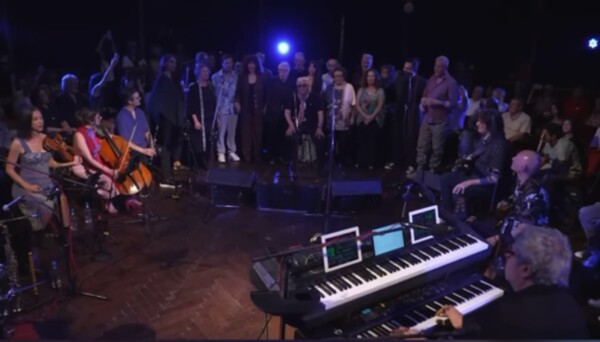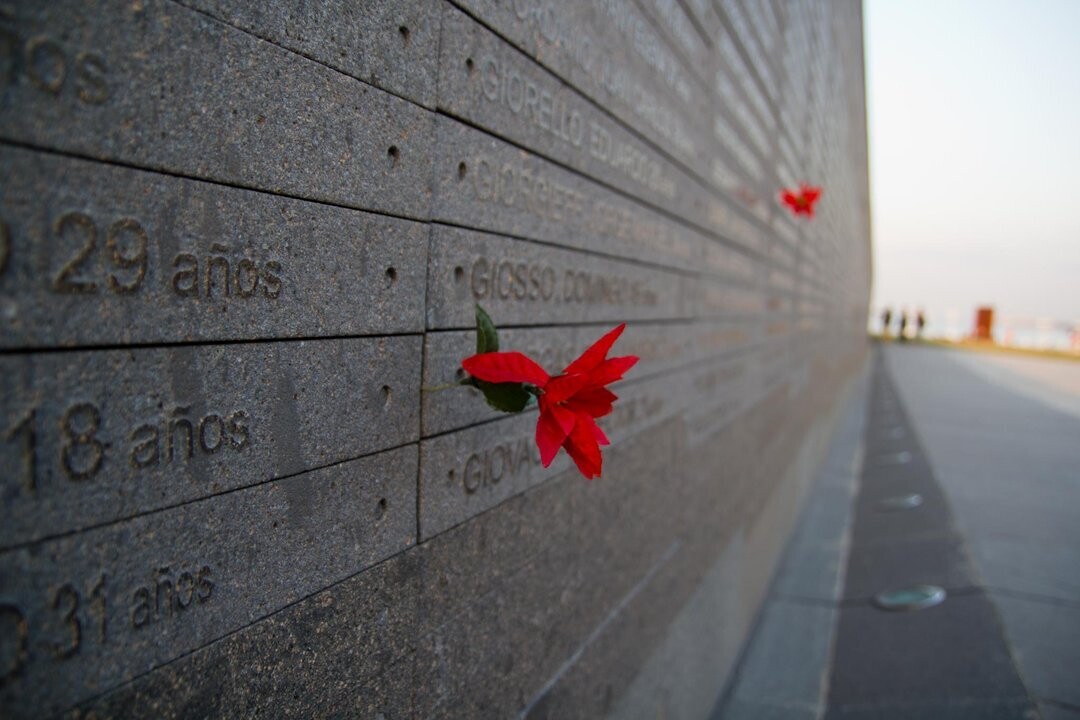
On the occasion of the 50th anniversary of the 1976 coup, the Parque de la Memoria – Monument to the Victims of State Terrorism presents a series of initiatives that articulate art, memory, and collective reflection. The projects propose different ways of inhabiting the recent past and thinking about its relevance in the present democratic context. One of the central experiences is 'Los Presentes' by artist Nicolás Varchausky, a performative installation in which a hybrid piano translates the names of the victims of state terrorism inscribed on the Monument into sound. In this gesture, listening becomes a form of presence: the names, repeated and transformed into sound, emerge as an active memory that refuses closure. In parallel, the exhibition 'Señores Jueces, Nunca Más,' created in conjunction with Memoria Abierta, reconstructs the judicial process initiated in 1985 against those responsible for the dictatorship. Through documents, testimonies, photographs, and works of art, the exhibition proposes to review the Trial of the Juntas as a foundational event, not only in legal but also ethical, cultural, and political terms. Far from a linear perspective, the exhibition highlights the tensions, advances, and setbacks that marked the path to justice in Argentina, emphasizing the key role of human rights organizations and survivors. In this sense, the tour not only revisits the past but also questions the present, reaffirming the need to sustain the legacy of Nunca Más in the face of new democratic challenges. Meanwhile, the exhibition 'Hay cuerpos,' curated by Laura Casanovas, brings together works by contemporary female artists who explore the multiple dimensions of corporeality. At the end of each day, live pianists replace the device, intensifying the human dimension of the work. The proposal invites a sustained, almost ritualistic listening, on the National Day of Memory for Truth and Justice. In the Parque de la Memoria, the response is rehearsed in an artistic key, where the past is not fixed as a closed narrative but is activated—time and again—in the shared experience. The exhibition thus proposes a reflection on the visibility, vulnerability, and power of bodies in the present. Half a century after the coup, the three proposals converge on the same question: how to remember without immobilizing, how to transmit without closing off. During several days, the instrument continuously reproduces this sequence, replicating the original order of the names—by year and alphabetically—and expanding them to the audible plane.